If you have ever wished you could step into the gingerbread house from Hansel and Gretel, this festive period is the perfect time to make your childhood dream come true.
The Gingerbread City® by The Museum of Architecture returns from 3rd December 2022 – 2nd January 2023 featuring five different (yummy) miniature cities.
This year over 100 leading architects, engineers, designers, and bakers have created not one, but 5 mini cities across different climate zones: Polar, Continental, Temperate, Dry and Tropical.
Photo: Urban Adventurer
The aim is to suggest a new normal in our post-Covid world where life is more sustainable, more convenient, more affordable, and less stressful.
Photo: Urban Adventurer
The different climate zones require designers and architects to take local resources and special building methods into account, as well as bring new creative ideas to the table in order to respond to climate crisis.
Gingerbread City Workshops
Photo: Urban Adventurer
The Gingerbread City is not just for the eye. The exhibition is running workshops– including family workshops – that you can book separately.
The workshops are running every day and invite participants to design their own gingerbread house for different climates in order to resonate the exhibition theme.
Adult workshops are available in the evening from 6pm-7:30pm.
“Marty! You gotta come back with me! Back to the future!”
Make sure you booked your ticket for yesterday because Back in Time Exhibition will bring you for an unforgettable journey to…well, not to the future, but behind the scenes of the famous 80s blockbuster trilogy, Back to the Future.
Put on your self-lacing shoes, don your auto-adjusting jacket, and fasten your seatbelt.
Marty’s auto-adjusting jacket
Photo: urban Adventurer
With over 70 original items, Back in Time Exhibition is the largest collection of Back to the Future memorabilia in Europe, and the collection is being showcased for the first time in London starting on the 26th November 2022.
Marty’s self-lacing Nike shoe
Photo: Urban Adventurer
Original costumes, concept drawings, set pieces, Mary McFly’s futuristic auto-adjusting jacket and self-lacing Nike shoes are all on display at Camden Market Hawley Wharf.
The Sports Almanac
Photo: Urban Adventurer
There photo ops and interactive displays, including a certified replica of the DeLorean (yes, you can sit in!), you can fly on Marty’s hoverboard or give a guitar solo at the school dance, your audience maybe not ready for yet, but surely, their kids gonna love in the future.
Hover Board
Photo: Urban Adventurer
Learn behind-the-scenes secrets the cast: Michael J. Fox, Christopher Lloyd, Steven Spielberg, Robert Zemeckis (and more) reveals in interviews.
Michael J. Fox Foundation
Marty’s Western shirt
Photo: Urban Adventurer
The exhibition is in partnership with Parkinson’s Research, so during your visit you have a chance to make donations for the Michael J. Fox Foundation on the site.
Grab a warm hug in a mug this Winter; we’ve found the prettiest and yummiest hot chocolates to try in London. These hot chocolates are not just rich chocolatey heaven, but super Instagrammable too.
EL&N Café is famous for being London’s pinkest and most Instagrammable café. They have multiply locations throughout London from Knightsbridge, to Carnaby Street, to Selfridges.
This Winter they have launched their ‘A Season of Sweetness’ menu with super Instagrammable cakes, such as pink Christmas tree or Santa’s Sleigh cake, and of course decadent hot chocolate creations, served in Santa or Christmas tree shaped mugs.
Chin Chin Labs is Europe’s first liquid nitrogen ice cream parlour, however, in Winter time they serve their signature hot chocolate with torched gooey marshmallow fluff. And the best part is, they have vegan and vegetarian versions too.
The Knot Churros is a real hidden gem with only one location in London. They serve dreamy churros desserts, milkshakes, special hot and cold drinks, all look like they were just stepped out from a fairy tale. They often do collabs with such brands like Disney or Care Bears.
In Winter time they serve limited-edition hot drinks, such as their dreamy ‘Candy Floss Hot Chocolate’, ‘Marshmallow Belgian Hot Chocolate’ or ‘Pink Hot Chocolate’.
Italian Bear Chocolate are using their very own recipes, rooted in Italian cultural heritage. It’s not just about producing all chocolate goodies locally. It’s also about that unique ‘Italian-style’ chocolate experience that they call ‘homely hospitality’.
Their most popular hot chocolate is ‘Triple Hot Chocolate’ which was first introduced in 2015, and is made with three different chocolates: dark, milk and white.
It goes perfectly well with their best-selling chocolate cake that also comes with the same triple melted chocolates on demand.
Dark Sugars brings you the authentic taste of African cocoa. Watch your hot chocolate being made in front of your eyes. They’re using a mixture of dark, milk and white chocolate flakes chopped in front of you to be melted in your choice of milk. They have a wide variety of flavours to choose from, such as chilli or praline, and you can have as much chocolate flakes in your drink as you possibly want.
Hotel Chocolat
Various locations throughout London
Photo: Urban Adventurer
When it comes to hot chocolate, Hotel Chocolat is what often comes to our minds first. And that’s not without reason!
The luxury chocolate brand offer a wide variety of indulging hot chocolate, from salted caramel, to chilli, to hazelnut, to mint. Their velvety decadent drinks contain different percentage of cocoa – from white chocolate 36% to dark chocolate 85% – and they even offer 100% dark cacao hot chocolate.
Just like Dark Sugars, Hotel Chocolat are using real flakes of grated chocolate to be melted into your choice of milk, and you can have the yummiest cocoa whip on the top for no additional cost.
And that’s not all. Hotel Chocolat are kid-friendly: for little hands, they serve half-measure of any hot chocolate.
Venchi Chocolate and Gelato
Various locations throughout London
Photo: Urban Adventurer
Venchi Chocolate and Gelato have an amazing history behind them. Venchi was established in 1878 and soon became “the most elegant chocolate shop in Piedmont”. The brand soon earned international recognition and opened shops in more than 70 countries around the world – including London.
Today Venchi have eight different locations in London, including Covent Garden and Harrods.
They serve amazing hot chocolate creations – including gluten-free and vegan options.
Ready for your next adventure? ‘Room to Breathe’ is a free immersive experience next to Tottenham Court Road Station. It’s a multisensory experience based on science to help busy Londoners, tourists and families calm down and relax throughout the day.
MISSION GOAL: To investigate how scientists and sci-fi
creators have inspired each other to visualize and
build new worlds and explore future possibilities human world may hold.
Your journey starts in a spaceship taking you to an adventure to discover how fiction and science have inspired each other.
You’ll learn more about the first sci-fi movies about travelling to outer space as well as how movies inspired scientists to build hibernation capsules allowing humans to travel far across the universe.
Photo: Urban Adventurer
You’ll see original and replica space suits used in movies and real life, such the space suit worn in 2007 movie, ‘Sunshine’ or the replica space suit worn in the iconic 1979 ‘Alien’ movie directed by Ridley Scott.
Photo: Urban Adventurer
There is also a replica of U.S.S. Enterprise from ‘Star Trek’ created for the show’s 30th anniversary in 1996. The replica is signed by actors, George Takei who played Sulu and Nichelle Nichols who played Uhura in the movie series.
THE MISSION
Photo: Urban Adventurer
You are guided through your galactical journey by an artificial intelligence, called A.L.A.N.N (Algorithmic Artificial Neutral Network). The mission is to observe humans, objects, items, and stories from the perspective of both science and science fiction and deeply analyse how the two fields have impacted human lives on Earth and figure out what future may hold for our species.
Photo: Urban Adventurer
Visitors are guided through scientific discoveries and more movie props and replicas to showcase how real science and imagination have impacted and inspired one another over the decades.
Photo: Urban Adventurer
Throughout the journey, the exhibition is seeking answers to ‘what if?’ questions and presents visions by digital artists on how they imagine our world could look like in the near or far future. Us humans, will we be wise enough to make the right decisions to fight against climate change and other catastrophes or will we face a dark future?
MISSION COMPLETE…?
Photo: Urban Adventurer
There are lots of different scenarios leading to different outcomes. It is impossible to tell where our future will take us. Humanity has the power to either save or destroy their planet. Our future lays in our hands.
Grant Museum of Zoology has around 68,000 zoological specimens – including the world’s rarest skeleton: the quagga – dodo bones and fossils, creatures of the deep sea, a collection of preserved brains, and much more. Let’s explore!
Extinct Species, Preserved Animals and Rare Skeletons
Photo: Urban Adventurer
Grant Museum of Zoology and Comparative Anatomy was established in 1827. Since the following year, the museum has been continuously used by students at University College London (UCL). The Grant Museum of Zoology first opened to the public in 1996.
The old-fashioned museum is packed with skeletons, preserved animals in jars, skulls, mystic creatures from the deep sea and remains of species now extinct, such as bones of Dodo that went extinct in the 17thcentury; a skeleton of a quagga which was a type of zebra or an egg from an Elephant Bird. Elephant Birds were hunted to extinction in the 1700s.
Photo: Urban Adventurer
There is a different section dedicated to animals in jars. For example, monsters from the deep sea, such as Three-Toothed Pufferfish or Wolf Fish.
There is a jar full of moles – and it’s a mystery who and why made that jar -; and ‘jars of assorted specimens’, such as lizards and terrapins.
A Collection of Brains
Photo: Urban Adventurer
The brain collection is originally from the anatomical and pathological collection of Kings College London’s School of Medicine, and it consists of mammal brains (except from a single turtle), preserved in alcohol. The brains were collected from Africa, Asia, South America, Australia, and Europe. Among others, the collection consists of a brain of a dog, a monkey, a gibbon, a rabbit, and an infant tiger.
Fossils
Photo: Urban Adventurer
Grant Museum of Zoology is proud to have a number of well-reserved fossils of long extinct dinosaurs, such as Ichthyosaur, a marine reptile lived 250-90 million years ago or Pterosaur, a flying dinosaur we all know from Jurassic Park and Jurassic World blockbusters.
The Micrarium
Photo: Urban Adventurer
The Micrarium is a back-lit corner displaying over 2,000 of the tiniest microscopic specimens, all in just 2.52 square metres. The slides mostly show whole tiny animals but there are bits of bigger animals, too, for example mammoth hair.
A narrow cast iron staircase leads to the basement to Museums of Curiosities. You descend to a rabbit hole where nothing makes a lot of sense; to a different world which is bizarre and sometimes even scarry but wakes up your curiosity and makes you wanting to discover more.
The space is small and narrow but is loaded with so many oddities that, if you really want to see everything, you could spend hours down there.
Occult Cabinet, Fairies, Dead Pets, Tribal Art and More
Photo: Urban Adventurer
Museum of Curiosities is divided into multiply sections, such as ‘Cabinet of Monsters’ that includes preserved animals in jars, while ‘Fairies, Mermaids & Giants’ section includes mummified fairies, the legbone of an Irish Giant, preserved remains of a mermen and more. ‘Magick & the Occult’ section includes a fully functioning Occult Temple, a jar of moles (yes, you read it right), Woodoo artefacts from West Africa, and an occult cabinet, just to name a few.
Photo: Urban Adventurer
There are countless of other sections and artefacts to discover, including erotic-themed paintings, artworks and photos, mummified pets, a large collection of butterflies, creatures of the deep sea and human hair, including Elvis Presley’s hair, the hair of a Titanic survivor and an 18th-century human scalp.
Absinthe Parlour & Cocktail Bar
Photo: Urban Adventurer
I would highly recommend not to leave the museum without trying one of their absinthe cocktails at their absinthe parlour. Museum of Curiosities’ absinthe parlour has the largest collection of traditionally made absinthes.
Photo: Urban Adventurer
Order an absinthe fountain, sip one of their absinthe cocktails or bring home a bottled absinthe or tasting set from the bottle shop.
Interested in occultism and occult cocktails?
Then you might want to take a look around the museum’s mini shop, where absinthe glasses & spoons, books, – such as a signed copy of ‘A Grimoire of Occult Cocktails & Drinking Rituals’ – artefacts, prints and more are available to purchase.
NOTE: Due to the adult nature of some of the exhibits (dead people, erotica) under 18s are only allowed before 5pm and must be accompanied by a parent or guardian.
Locals living within walking distance with proof of address may buy £6 tickets on the door
Tuesday discount
Discounted tickets are £5 on Tuesdays (walk-in only)
OR
£2.50 on Tuesdays (walk-in only) IF you order a drink at the bar
Opening Times
Tuesday – Friday 15:00-23:00
Saturday 12:00 – 23:00
Sunday 12:00-22:00
Ready for your next adventure? Do you think you could solve the hundred-year mystery around the identity of Jack the Ripper? Visit Jack the Ripper Museum.
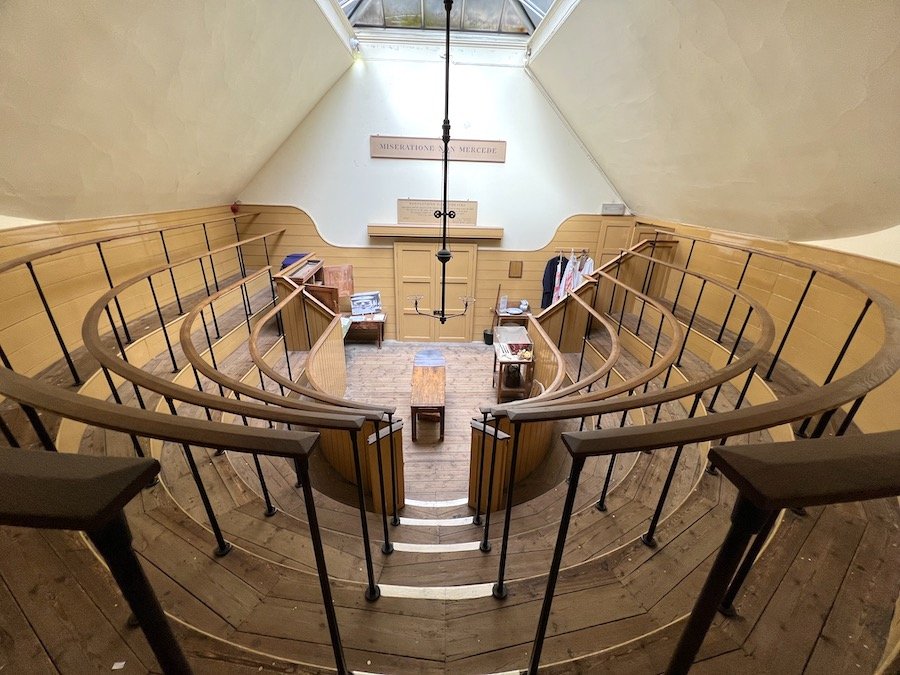
Located next to London Bridge station, The Old Operating Theatre is Europe’s oldest surviving operating theatre. You might remember from movie scenes when medical students gather around an autopsy table in a horseshoe-shaped room to witness an autopsy or an operation on a human body to learn about the organs and anatomy.
Well, let’s step into that movie scene…
Watch mini video tour here (coming soon).
Access Through a Spooky Narrow Spiral Staircase
Photo: Urban Adventurer
The Old Operating Theatre is an extraordinary museum in many ways, but it’s really not for everyone. Here’s why.
The museum is housed in the attic of an 18-century church. This church once belonged to St Thomas’ Hospital.
In order to get access to the museum, you have to climb a 52-steps narrow spiral staircase. This experience is spooky enough by itself for some of us to decide to quit the whole thing. It also means, that currently there is no wheelchair access to the museum.
Original Herb Garret
Photo: Urban Adventurer
The original Herb Garret used to dry and store herbs in this attic in 1822 where the operating theatre was included.
This original timber framed Herb Garret is where your theatre journey starts. Here you’ll learn more about herbs and for what and how they were used back in the 19th century and how apothecaries used those herbs to make medicines.
Horrifying Facts
Photo: Urban Adventurer
Leaving the Herb Garret your journey gets more thrilling.
You’ll learn about (the lack of) hygiene, pain relief methods and equipment used in the 19th century.
During the period the operating theatre was in use – between 1822 and 1862 – surgical equipment was rarely washed before the operation. Bandages were often reused, and surgeons washed their hands and the medical equipment after the operation rather than before. This practice caused serious infection and later the death of many patients even if the operation itself was successful. This became known as ‘ward fever’.
In the 19th century, forms of pain relief were most often alcohol or opium. Sometimes, however, surgeons administered too much or too little pain relief that resulted the patient not waking up at all after the operation or waking up throughout the operation.
Photo: Urban Adventurer
Despite of the high mortality rate, which was 30% in the 19th century, amputation was regularly performed for cases of disease, accident, or trauma. But even if the patient survived, they had to face the high risk of infection caused by that fact that surgical equipment at that time was not cleaned properly.
Before 1846, amputations were performed using a knife or saw. Many of that hair rising equipment is on display in the theatre. (I am so glad I am living in the 21st century…)
The Operating Theatre
Photo: Urban Adventurer
The next room to visit is the operating theatre itself. It’s a small horseshoe-shaped room with high glass ceiling to let as much light as possible for clearer view.
Despite of the theatre’s relatively small size, it allowed 140 people in total to witness an operation or autopsy.
Photo: Urban Adventurer
Here the exhibition gets even more interactive. If you download The Old Operating Theatre mobile app and follow the instructions, you’ll get access to an Augmented Reality experience: you’ll step into the shoes of a 19th century medical student and get fist-hand information of the latest procedures. (Don’t worry, nothing disturbing will happen during the AR experience)
Preserved Organs and Women’s Health
Photo: Urban Adventurer
Continuing your journey within the museum, you’ll get the opportunity to see some human organs floating in formaldehyde and learn more about anatomy and dissection.
You’ll learn for instance, that by the middle of the 18th century dissection of the dead had become a central to surgical education. It means that fresh human corpses had become extremely valuable in surgery to rehearse operations and educate anatomy.
Due to the extreme high demand, the number of available human bodies became limited, and this was the point when body snatchers started stealing recently buried bodies and sold them to anatomy schools.
The next section is dedicated to women’s health, focusing on birth giving. Here you’ll see a number of absolutely blood-curdling forceps, scissors, crochet hooks, and other equipment you would never want to be used on you. (Again, glad to live in the 21st century…)
Events at The Operating Theatre
There are a number of events The Old Operating Theatre hosts throughout the year.
Upcoming events for example: Surgery & the Victorian Operating Theatre Live Event, Mummies and Medicine, A Victorian Mummy Unrolling Demonstration, Victorian Gothic Tales, and there are so much more down the line.
Unique accessories that go perfectly well with your Halloween costume, such as brain stud earrings, heart stud earrings, apothecary poison bottle earrings & necklace, bone saw pedant and brooch, scull brooch, blinking doll eye necklace, keychain & hair grips, and the list goes on.
Cool! What else?
How about a graduation brain cell keyring, Coronavirus plushie, DNA plushie or uterus plushie?
Hmmm, would you try some cubed earwax, organ marmalade or olde fashioned brain jam? If you’re craving for something crunchy, I would recommend the toasted bone chunks to try. All those yummy treats from Hoxton Monster Supplies.
Apart from all of these, the shop offers lots of books, original artworks inspired by the museum, board games and more.
Practical Info
Please note: There are no public toilets onsite at the Museum.
Jack the Ripper is one of the most famous serial killers in the world who is believed to have killed eleven women in Whitechapel, London between 1888 and 1891. Despite of the fact that he sent multiply hand-written letters to the police and newspapers, the grisly murderer’s identity is still a mystery after 100 years. Jack the Ripper Museum is displaying original artefacts and recreate crime scenes.
The mysterious murderer inspired countless of books, movies, and theories, trying to solve the Ripper’s case, however, it still remained unsolved even today.
Jack the Ripper Museum is located on Cable Street which location does actually have connection with the Ripper’s third victim, Elizabeth Stride: her body was taken to St George-in-the East Mortuary off Cable Street.
Original Artefacts and Recreations of the Crime Scenes
The original “From Hell” letter believed to have been hand-written by The Ripper
Photo: Urban Adventurer
The museum is a 6-floor Victorian building packed with never-seen-before original artefacts, such as the famous original “From Hell” letter, written by the Ripper and sent to George Lusk, the president of the Whitechapel Vigilance Committee on the 16th October 1888. Along with the letter The Ripper sent a three-inch cardboard box that contained a half human kidney that is believed to once have belonged to Catherine Eddowes, the fourth victim of the Ripper.
Original artefacts: whistle and handcuffs PC Watkins was carrying on the night of discovering Catharine Eddowes’ body
Photo: Urban Adventurer
The museum provides detailed exhibits of the Ripper-related crime scenes, the investigation, the recreation of The Ripper’s final victim, Mary Kelly’s bedroom, the recreation of how Jack the Ripper’s sitting room would have looked, original newspaper cut-outs and more.
Disturbing Original Photos of the Victims’ Dead Bodies
The most disturbing room within Jack the Ripper Museum
Photo: Urban Adventurer
Jack the Ripper Museum is not for everyone. In the basement, there are original photographs of the victims’ dead bodies and an authentic autopsy table. This room is the most disturbing among of all, so if you don’t want to see the photos, simply skip the basement, and start your tour on the first floor.
(The restroom is also in the basement, but none of the photos are visible from the outside of the exhibition room and there is also a warning sign on the door.)
Everything to Know about the Ripper
Recreation of The Ripper’s final victim, Mary Kelly’s bedroom
Photo: Urban Adventurer
Although, some of the rooms and artefacts might be disturbing to some of us, Jack the Ripper Museum is designed to educate their visitors by giving information of the history of women in the 19th century and how life was in the East End of London during the Victorian times.
As Jack the Ripper’s victims were all appeared to be prostitutes, the museum gives a detailed description on how difficult life was for those living in poverty during the Victorian era.
Walking through the museum feels like visitors was really strolling on the streets of the Victorian London: sounds and smells help visitors time travelling to the 19th-century Whitechapel under the dim lights.
Highlights of Jack the Ripper Museum
Photo: Urban Adventurer
The original “From Hell” letter believed to have been hand-written by The Ripper
The original whistle, handcuffs, truncheon and notebook PC Watkins carried during the night when he discovered Catharine Eddowes’ body on Mitre Square at 1.44am on 30th September 1888
Original newspaper articles about the crimes
The recreation of The Ripper’s final victim, Mary Kelly’s bedroom
A lock of Mary Kelly’s hair
Photo: Urban Adventurer
Lock of hair of The Ripper’s final victim, Mary Kelly (find it on the wall in the Ripper’s sitting room)
Original photos and illustrations of the victims
Recreated scenes with life size wax figures
Jack the Ripper’s sitting room as it would have looked like based on the beliefs of his identity
Victorian style props
Photo: Urban Adventurer
If you enjoyed your visit, don’t forget to purchase some souvenir in the shop to support this extraordinary museum.
How is war represented in the virtual world of video games? Imperial War Museum (IWM) have launched a free immersive experience that explore how the barriers of reality and the virtual world is blurred and how video game technology has been used over the decades to depict confits and even shape real wars. Immersive experience, War Games: Real Conflicts | Virtual Worlds | Extreme Entertainment opened on 30th September and showcases immersive installations, never-seen-before objects and a retro gaming zone with playable video games.
War Games: Real Conflicts | Virtual Worlds | Extreme Entertainment
Photo: Urban Adventurer
If you have ever played war-themed video games, you might have noticed how mind-blowingly real the graphic, the scenarios and even the sounds can be. This is because some modern video games depict thoroughly researched historical events.
In fact, tremendous amount of research, consultations with historians and other experts are taken place behind the scenes when creating and launching a new video game. For example, ‘Six Days in Fallujah’ has been developed based on real testimonies of marines, soldiers and civilians affected by the Second Battle of Fallujah.
Other video games, such as ‘Worms’, on the other hand, grab the more artistic and humorous side of historical events.
Photo: Urban Adventurer
Chris Cooper and Ian Kikuchi, Co-curators of War Games, say: “The drama and tragedy of
war has fascinated us for millennia. Paintings, books, plays, films and tv shows have all told gripping stories about conflict. Video games have continued this tradition in the twentieth and twenty-first centuries, becoming today’s largest and fastest growing entertainment industry. We hope this exhibition prompts visitors to consider the influence this media might have on our perceptions and understanding of war and conflict.”
Gaming Zone
Photo: Urban Adventurer
War Games exhibition includes a retro gaming arcade with 13 iconic playable games, including ‘Top Gun’, ‘Battlezone’, ‘Call of Duty: Modern Warfare’, or ‘Medal of Honour’.
Never-Seen-Before Objects on Display
Photo: Urban Adventurer
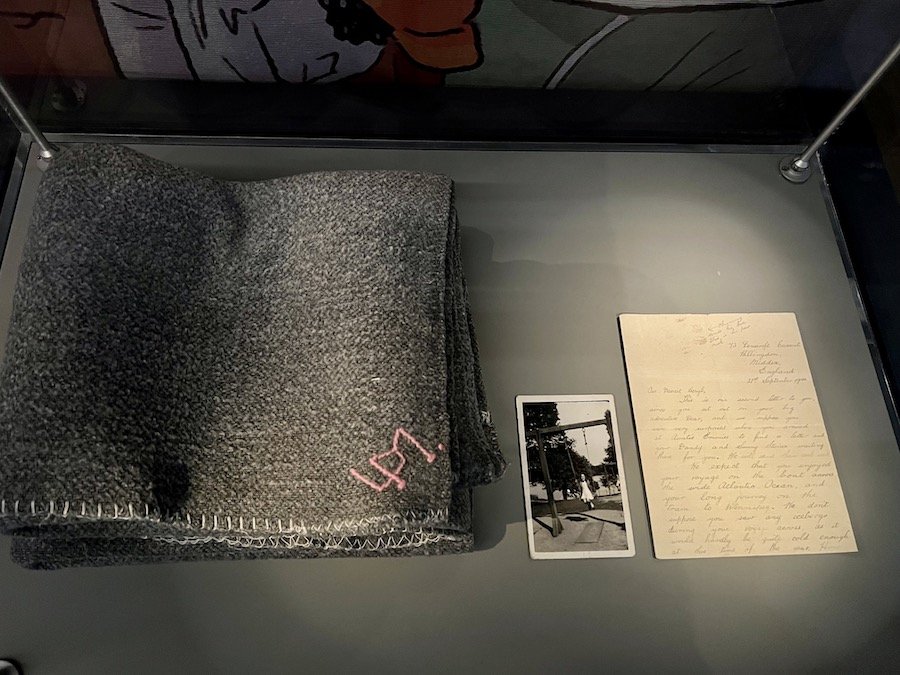
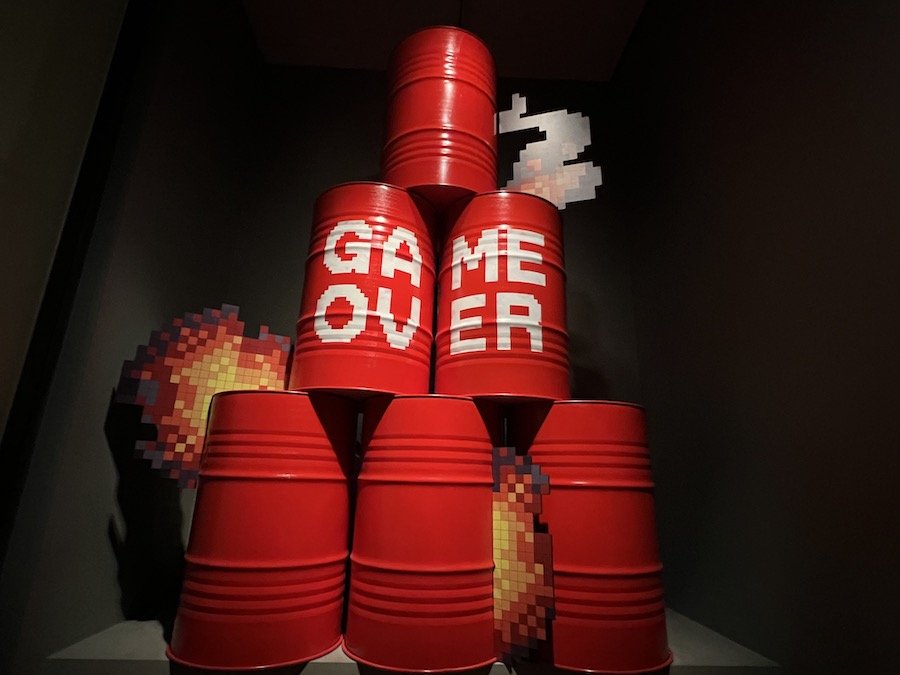
Common gameplay tropes, such as explosive barrels and sniper riffles are on display alongside with items and belongings to real individuals who were involved in wars either as a civilian or soldier.
Case studies, such as ‘Bury Me, My Love’ and ‘This War of Mine’ are also on display to give visitors goosebumps by showcasing the real thrill and tragedy of warfare.
An Xbox 360 controller once used to operate the camera of an unmanned aerial vehicle in Afghanistan and Iraq is also on display.
Ready for your next adventure? Get closer to dinosaurs like never before, meet life size dinosaurs and find yourself in well-known movie scenes. Jurassic World: The Experience is open till 3rd November 2022.
Immerse into the world of anime, videogames and sci-fi. LuYang NetiNeti, is a new immersive experience inviting you to a fantastical, sometimes shocking, yet humorous world by blending modern technology, Buddhism, and art.
Chinese multimedia artist, LuYang opened their first solo exhibition: LuYang NetiNeti in Zabludowicz Collection on 22nd September 2022.
The title of the exhibition is LuYang NetiNeti where ‘neti neti’ comes from Sanskrit and has the meaning ‘neither this, not that’. The main focus of the exhibition is on the artist’s own avatar, DOKU that has been created using CGI animation and motion tracking.
During the whole exhibition, six different versions of DOKU appear, representing the six paths of Buddhist reincarnation: Hell, Heaven, Hungry Ghost, Animal, Asura and Human.
The Main Hall – Heaven and Hell
Photo: Urban Adventurer
We can follow DOKU’s transformations through the Main Hall, where DOKU’s Heaven and Hell characters engage in a dance on a yin yang symbol and transform into a completely new character: the binary god.
Still in the Main Hall we can witness DOKU being on an airplane encountering their six different selves while going through numerous perceptions. This video is called DOKU the self (2022) and was first shown in Venice at the Venice Biennale in this year.
Mezzanine – Earth, Water, Fire and Air
Photo: Urban Adventurer
The next video installation on the Mezzanine level of the Main Hall is Electromagnetic Brainology (2017). It features four gods related to the four ‘great elements’: earth, water, fire, and air. Each god wields a wand and strengthen themselves into super gods to triumph over depression and increase happiness and human potential.
The Middle Gallery – Thought-Provoking Collaborations from the Past
Photo: Urban Adventurer
The Middle Gallery showcases some thought-provoking collaborations the artist made in the past with J-pop idols, scientists, and music producers. The videos include the Zabludowicz Collection work LuYang Delusional Crime and Punishment (2016) and Uterus Man (2013) which is about sexualised anime superhero genres.
The Back Gallery – Interactive Arcade
Photo: Urban Adventurer
The Back Gallery is transformed into an interactive arcade where visitors can play with retro arcade games. In the centre of the space is Material World Knight project (2018-) in which game a number of LuYang’s earlier characters appear.
You can sit on a motorbike and fight against villains as Uterus Man or play Cancer Baby (2014) which is a Space Invader-style video game.
About the Artist
Photo: Urban Adventurer
LuYang graduated with a BA and MA from the New Media Art department of the China Academy of Art in Hangzhou.
The artist is famous for creating futuristic – sometimes shocking – worlds in collaboration with pop stars, robotics companies, music producers, composers, designers, and performers.
The artist blends psychology, religion, and modern technology – including virtual reality and neuroscience – to create an anime-like universe to investigate the mysteries of human body and mind, and mechanics.
Ready for your next adventure? You still have a chance to visit VOICE GEMS: 1000 YEAR ARCHIVEimmersive digital art exhibition for free in Flannels, Oxford Street. The exhibition features unique digital gemstones generated from human and animal voices. Hurry up! VOICE GEMS: 1000 YEAR ARCHIVE is open until 29th September 2022.
We use cookies on our website to give you the most relevant experience by remembering your preferences and repeat visits. By clicking “Accept”, you consent to the use of ALL the cookies.
This website uses cookies to improve your experience while you navigate through the website. Out of these cookies, the cookies that are categorized as necessary are stored on your browser as they are essential for the working of basic functionalities of the website. We also use third-party cookies that help us analyze and understand how you use this website. These cookies will be stored in your browser only with your consent. You also have the option to opt-out of these cookies. But opting out of some of these cookies may have an effect on your browsing experience.
Necessary cookies are absolutely essential for the website to function properly. This category only includes cookies that ensures basic functionalities and security features of the website. These cookies do not store any personal information.
Any cookies that may not be particularly necessary for the website to function and is used specifically to collect user personal data via analytics, ads, other embedded contents are termed as non-necessary cookies. It is mandatory to procure user consent prior to running these cookies on your website.