Scott’s Mayfair’s dreamy moon decoration is inspired by a celestial event taken place back in 1811 when a bright comet with twin shimmering gold tails appeared in the sky.
In partnership with the famous wine and champagne producer, Perrier Jouët, this elegant decoration, called ‘Starstruck Christmas’ celebrates that unique event under which Perrier Jouët was founded.
The private member club is famous for its extravagant decorations changing throughout the year. In collaboration with Swarovski this year, Annabel’s unveiled a glittering crystalized life-sized gingerbread house façade in late November which instantly became social media famous.
TIP: Take a closer look when visiting and admire the huge crystals covering the giant green bow and the Santa figure.
EL&N Café’s Brompton Road branch’s Christmas decoration is inspired by Duncan’s Toy Chest in the iconic movie, Home Alone 2: Lost in New York. Ultimate nostalgia guaranteed.
Don’t forget to try their new themed drinks and sweet treats menu, including ‘Kevin the Snowman’ Nutella mousse with brownie.
Whoville has come to The Ivy Chelsea Garden. ‘Miracle on the Mount Crumpit’ brings you the ultimate Christmas cheer but beware of the Grinch lurking above your head with sour sneer.
Once you’re ready with your selfies, make sure you try their fun drinks menu which includes alcoholic and non-alcoholic festive cocktails, such as ‘Cindy-Lou Who’ and ‘Whoville Hot Chocolate’ or choose the mean one: ‘Grinch Jooose’.
This restaurant’s terrace in Mayfair is full of Christmas trees and presents. In collaboration with Courvoisier UK, the menu brings you a limited-edition dessert, called ‘As Choux Like It’ and unique spicey Christmas cocktails.
Hedonism Wines is famous not just for their top-shelf wines and spirits. It’s a destination to many Londoners during the festive period to see their magical Christmas installation in front of the shop.
This year they showcase a beautiful Winter scene with show-covered slopes, a snowman, and a red post box to send your secret Christmas wishes to Santa.
The iconic store of luxury fashion and homeware traditionally surprises us with unique and decadent in-store decoration every year in December.
This year they have erected a spectacular purple hot air balloon in their main hall, garnished with Christmas postcards and presents.
Ready for your next adventure? Is one of your loved ones a Queen fan? Why not pop in to the iconic band’s pop up shopin Carnaby Street to find a really special gift for this Christmas?
Pick up your stakes, grab your garlic garland, and fill in your holy water bottle because we’re going for a vampire hunt in Highgate Cemetery.
The Story Begins
Photo: Urban Adventurer
In the 1960s interest in vampires was high thanks to movies and TV shows dealing with horror stories about supernatural creatures sucking human blood.
As a result, when Evening Standard published a report about vandalism in Tottenham Park Cemetery, many Londoners quickly jumped into the conclusion that the culprit must had had a vampire.
According to the article, unknown persons entered the cemetery and dug out a newly buried body to drove a sharpened iron bar through the lid straight into the corps’ heart. The report also said that flowers were arranged around other graves in bizarre formation.
14 months after this incident a series of newspaper articles and two vampire hunters started a hysteria around vampires.
Hampstead and Highgate Express published a letter written by a local enthusiast of the paranormal, David Farrant, claiming that he had seen a mysterious tall dark man standing in Highgate Cemetery on Christmas Eve 1969. Farrant claimed he had spoken to two people who had had similar experiences.
Photo: Urban Adventurer
Farrant decided to investigate this by spending a whole night in the cemetery. He later said, he had thought the mysterious figure might have just been an animal, but around midnight he glimpsed a tall dark figure with red eyes floating above the ground. Farrant reported he had felt like losing control of his body and mind and the air suddenly turned icy. To escape from the terrifying situation, he had repeated some Kabbalistic incantation. Shortly after the phantom disappeared.
In February 1970 Farrant asked the local newspaper readers in another article if they had similar encounters.
A number of people responded; however, they gave slightly different descriptions of the mysterious entity. One had seen a tall man wearing a hat, another person depicted a lady dressed in white, while someone else claimed they had witnessed a ghostly cyclist.
Meanwhile, another man with interest in the supernatural published his ideas in Ham and High newspaper. In the article entitled “Does a Wampyr Walk in Highgate?” Sean Manchester shared his theory about the paranormal events.
According to Manchester ‘a King of Vampire of the undead’ was buried in Highgate Cemetery. That vampire was originally a Romanian aristocrat who was a black magic practitioner and had been transported to England by his followers in a coffin in the 18th century. His followers had even purchased a house for him in the elegant West End area.
According to Manchester, Satanists recently carried out rituals to reawaken the evil, that’s why the vampire appeared again. Manchester claimed he had spoken to local people who had experienced vampire activity, such as anaemia, nightmares about the evil, and there were people with two small round shaped wounds on the neck.
The Vampire Hunt
Photo: Urban Adventurer
On the evening of Friday 13th March 1970, the two vampire hunters, Farrant and Manchester went to Highgate Cemetery to search for and kill the vampire. ITV aired a program on that day that included a live report from the cemetery.
Within two hours, a mass of people started gathering around the cemetery, and many of them climbed over the walls to help the vampire hunters find and kill the evil. There were so many people that the police were unable to stop them.
It is said that Manchester and his companions penetrated into a catacomb and found a sinister-looking black coffin that didn’t seem to fit to the others laying down there. Manchester performed an exorcism using garlic and holy water and sprinkled salt around the coffin. A few months later remains of a woman were found in the catacomb showing signs of black magic ritual.
Later Manchester found similar black coffins in the cemetery and did the same rituals.
Meanwhile Farrant attempted to communicate with the Highgate Vampire using two circles, candles, incense and a medium. His first attempt was interrupted by the police, but the second attempt was successful. An entity appeared and grabbed him by the throat. Farrand had to break the circle to escape.
After that Farrant came up with a new theory. He claimed the entity was malignant and was not a vampire at all, but an evil presence.
Highgate Cemetery Purged
Photo: Urban Adventurer
In 1974 Manchester and his team went back to the cemetery to find another black coffin. They removed the lid and found and evil creature with fierce eyes and drawn-back lips. Manchester drove a stake into the “vampire’s” heart and then he and his followers burnt the coffin with the body. After this Manchester claimed, “Highgate Cemetery is purged.”
Even Discovery Channelcreated a report around the Highgate vampire and story of the vampire hunters.
The Highgate Vampire Returned?
In 1991 Declan Walsh claimed he had witnessed a tall very thin man dressed in Victorian style as walking through a locked gate.
Another witness took a glimpse of a figure floating from the east site to the west site of the cemetery in 2005.
Many popular horror stories were inspired by the Highgate vampire and even filmed within the cemetery, such as “Tales from the Crypt”, “Taste the Blood of Dracula” and “Dracula A.D. 1972” starring Christopher Lee. The latter was directly inspired by David Farrant’s vampire hunting activity.
The Highgate vampire appears as a villain in television series, such as “Buffy the Vampire Slayer” (season 9) and in comics, such as the “Dark Horse”.
Do you believe in vampires?
Ready for your next adventure? Why not book a spine-chilling experience in one of the oldest prisons in England, The Clink Prison Museumthis October?
After collecting the best shops for Halloween, it’s time to explore London’s weirdest, spookiest yet most wondrous museums to visit in London during the spooky season.
Located in the attic of an early 18th-centurey church of the old St Thomas’ Hospital, The Old Operating Theatre & Herb Garret is Europe’s oldest surgical theatre.
The museum takes you back to the Victorian era and showcases the equipment, tools and guide you through the most common surgical procedures have been taken place 200 years ago.
In the 18th century more than 150 medical students gathered in this original space to learn about surgery.
Photo: Urban Adventurer
The museum regularly hosts online and offline events. They also offer spine-shivering quirky treats, human preserves and edibles. Why not treat yourself with some Sugar Dusted Bogies, Cubed Earwax or 0+ / AB- Blood Drops after your museum experience?
NOTE: The entrance is via a 52-step narrow spiral staircase.
Opening Times
Fridays and Saturdays only, 10:30am – 5pm (last admission is 4:15pm)
The notorious serial killer, Jack the Ripper committed a series of murders in London during 1888. Despite of the hundreds of theories, movies and books trying to solve the mystery, The Ripper’s identity remained unsolved.
Jack the Ripper Museumis situated in the heart of Whitechapel, not far from the very spot where the Ripper’s third victim, Elizabeth Stride’s, body was found.
By exploring the museum, you will discover everything to know about the Ripper’s victims, the main suspects of the murders, the police investigation, and the details of each murder, including names, ages, locations, newspaper reports, and even illustrations of the crimes.
The museum offers guided tours to visit the crime scenes, museum-only tickets, and hybrid tickets.
Opening Times
7 days a week from 10am. Last entry 5:30pm
Tickets
Start from £10 for adults and £8 for children.
The Viktor Wynd Museum of Curiosities, Fine Art & UnNatural History
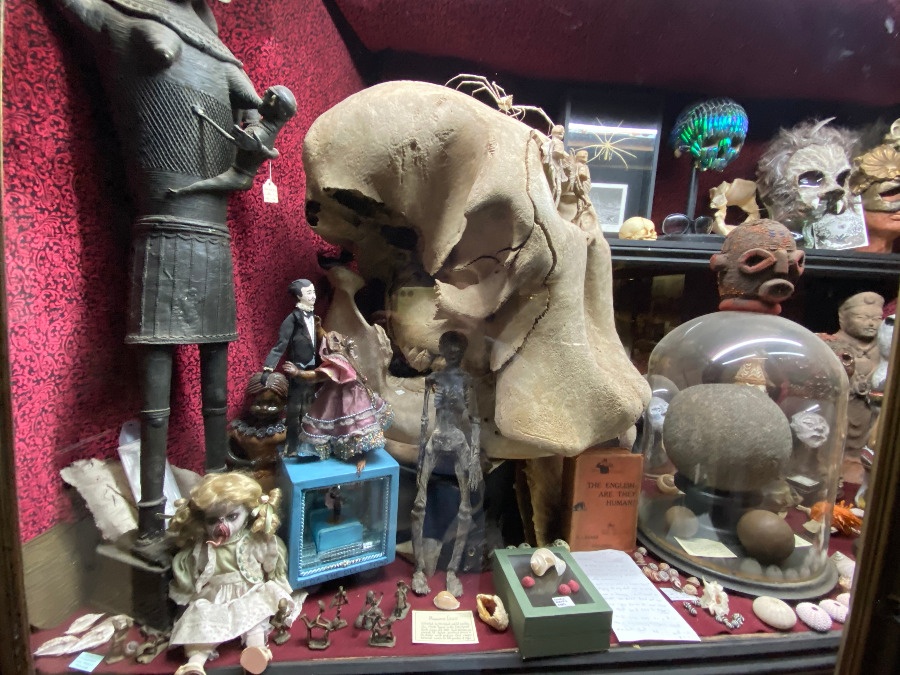
As its name suggests, The Museum of Curiositiesshowcases weird and wonderful artifacts and treasures collected from different corners the world. Creatures with extra head and limbs, African masks, conserved head in a jar, creepy dolls, occult cabinets, and other oddities to be seen. This museum is not for the faint-hearted.
The museum has an award winning Absinthe Parlour & Cocktail Bar where you have the opportunity to explore and taste the most extraordinary elixirs from the furthest corners of the world.
Opening Times
Thursday – Saturday 3pm – 11pm
Sunday 2pm – 11pm
Tickets
Adult: £10
Concessions: £6
Special offer: £5 / £2.50 Concession admission on Thursdays for walk-in customers
Locals living in a walking distance with proof of address can buy a ticket for £6 on the door
Dating back to 1144, The Clink Prison Museum is one of the oldest and most notorious prisons in England.
Ring the bell for jailer and step inside through the original entrance of the prison. The museum will guide through the cells where prisoners were living, explore different torture methods witches, pirates and other criminals were being hit by and you can even open a mysterious coffin and discover what’s inside at the end of the tour – if you dare.
Don’t forget to have your own free imprisoned photo taken before you leave.
Photo: Urban Adventurer
The Clink Prison Museum is undoubtedly one of the most hunted places in London. If you feel the brave in your heart, you can book a Ghost Hunt Experience to attempt to make connection with the spirits still living within the prison’s walls using Ouija Boards, Glass Divination and other methods.
Other guided tours, including fun educational tours are also available.
Opening Times
7 days a week, 10am – 6pm
Last admission is 30 minutes before closing.
Tickets
NOTE: The museum and the tours are suitable for children aged from 7
Pollock’s Toy Museum is the oldest toy museum in the UK. The museum has two buildings and 6 different atmospheric rooms to display their extensive collection of dolls, puppets, Teddy Bears, dolls houses, optical toys, and toy theatres of the past.
The museum hosts regular events and workshops. They have plenty of events and activities for all ages this October, such as Magic Lantern Workshop, Incy Wincy Spider Trail or Magic Lantern Storytelling Tours, just to name a few. Ticket prices for events are vary.
Opening Times
Monday – Saturday 10am – 5pm
Sunday CLOSED
Tickets
Adult: £9
3-15 Child: £8
Under 3: Free
Ready for your next adventure? Explore the Devil’s Tavern and the execution dock and other notorious execution sitesin London.
As part of Frieze London 2021, the emerging American artist duo, Wickerham & Lomax transformed a hotel basement into a mixed-media installation using CGI, sculpture, digital imagery and the Internet.
CULTURE’S PANIC ROOM
Photo: Urban Adventurer
The immersive exhibition is called ‘CULTURE’S PANIC ROOM’ and situated in the basement of The London EDITION hotel in Soho.
The artist duo has transformed the basement into a reflective and sensory experience. The exhibition imitates a panic room with digitally rendered CGI characters as tropes surrounding: the heist, the encounter, the intruder and the stranger.
Through the interaction of the CGI characters and other visitors of the exhibition, audience is being encouraged to reconsider their relationships with one another and themselves.
Blurring the Boundaries Between Reality and the Virtual World
Photo: Urban Adventurer
Wondering in the forest of acrylic sculptures, neon lights, CGI characters and plexiglass sculptures, visitors feel like the boundaries between reality and the virtual world are blurred and then and vanished.
Having been inspired by pop culture, cinema, fashion and personal experiences, the mixed-media installation is not just immersive, but thought-provoking too. The exhibition is revolving around questions such as luxury, individuation, access and presence.
Address
The London EDITION
10 Berners Street
London
England
W1T 3NP
Opening
14th – 28th October 2021
Monday to Sunday 6pm – 11pm
Admission
FREE
Ready for your next adventure? Here are the best and quirkiest shops to do your Halloween shopping.
We all know Stephen King’s famous novel, ‘Pet Sematary’. Many of us spent nights reading the book full of dreadful mysteries about a cemetery dedicated to pets; and the soil bearing spiritual power to let the dead come back to life again.
Well, the pet cemetery does exist and it’s in Hyde Park.
Older Than You Think
The Pet Cemetery is at Victoria Lodge rare garden.
Photo: Urban Adventurer
Hyde Park secret Pet Cemetery was not opened by plan.
Let’s go back in time in 1881, when this little graveyard’s story started with Cherry, a Maltese terrier.
Cherry loved spending time in Hyde Park with their owners Mr and Mrs J. Lewis Barned. As they visited Hyde Park quite often, the husband and wife made a friendship with the park’s gatekeeper Mr Winbridge.
When Cherry passed away at an old age, their owner approached Mr Winbridge and asked if there was any chance to bury their beloved dog within the park, in Victoria Lodge’s back garden, as that had Cherry’s favourite place been.
They got the permission and Cherry’s tombstone is still there with its inscription, ‘Poor Cherry. Died April 28. 1881’
The Prince’s Dog
Photo: Urban Adventurer
The next pet to be buried here was Duke of Cambridge’s beloved dog, a Yorkshire terrier, named Prince. Prince had met his end under the wheel of a carriage in an unfortunate accident.
Soon, Hyde Park became wealthy Londoners’ beloved companions’ final resting place.
More Than a Thousand Graves
Photo: Urban Adventurer
The Pet Cemetery closed in 1903 as it was getting too cramped.
By the time the cemetery closed, 300 little souls had been laid to rest in the tiny back garden. The Victorian cemetery was the first public pet cemetery in Britain, and over 1,000 pets buried there.
Dogs are the Most Common Animals
Photo: Urban Adventurer
Mostly dogs are buried in the Pet Cemetery – many of them had a fatal encounter with carriages – but there are plenty of cats and birds and even a monkey.
Photo: Urban Adventurer
The headstones bear simple inscriptions addressed to faithful companions:
“In loving memory of my darling little Cirrie, Died March 14 1893”
“To the beloved memory of Orphie, Most faithful devoted friend who left us sorrowing, Died Aug 22 1897”
“In memory of my dearest little Susan”
There is even a victim of a murder, Balu.
“Balu, Son of Fritz, Poisoned by a cruel Swiss, 1899”
Photo: Urban Adventurer
How to Visit
The cemetery is not open to the public but at rare occasions The Royal Parks organise walking tours that include special viewing to the Pet Cemetery.
If you missed the special viewing, you can still contact with Hyde Park and arrange a one-hour private viewing.
Peek through the railings by Victoria Gate to catch a glimpse of the real Pet Cemetery.
Photo: Urban Adventurer
Alternatively, peek through the park’s railings by Victoria Gate and you can catch a glimpse of the tiny tombstones. Map
Ready for your next adventure? Visit London’s weirdest museum: Museum of Curiosities.
In collaboration with Bravado (Universal Music Group’s merchandise and brand management company), the legendary British rock band, Queen, opened a pop-up store in Carnaby Street to celebrate 5 decades of music.
The 2-story pop-up shop takes visitors on an immersive journey to explore the band’s history over the decades from the 1970s, when Queen was formed, through the 1980s legendary live performances till today.
‘Queen the Greatest’ opened its doors today (28th September 2021) and will be there for the fans to explore and enjoy until January 2022.
To make it even more exciting, the store will change its entire theme each month. Here’s the schedule:
OCTOBER – MUSIC MONTH
Photo: Urban Adventurer
October will be about album and solo releases.
Check the dates of the limited-edition vinyl releases here.
NOVEMBER – ART & DESIGN MONTH
Photo: Urban Adventurer
November will see the store showcasing a lineup of collaborative partners, such the Japanese designer, Tokolo or a limited-edition bear from Steiff.
DECEMBER – MAGIC MONTH
Photo: Urban Adventurer
In December the store will be filled with everything you need for a magical Christmas, from Christmas jumpers and wrapping paper to accessories, such as drinkware, caps and tote bags. If you love Monopoly, you can even ‘tour’ the world with the band with a Queen Monopoly game.
Fashion Collaborations
Photo: Urban Adventurer
The store has introduced new and exciting fashion collections, including exclusive collaboration with Champion, Wrangler and Johnny Hoxton jewellery.
The Champion collection features unisex T-shirts and sweatshirts, while denim pieces adorned with iconic song titles are up for grabs from Wrangler.
Designer Johnny Hoxton exclusive silver and gold jewellery creations are also available in store.
If you purchase an exclusive Freddie Mercury T-shirt, the profit will go to The Mercury Phoenix Trust. The charity was founded by Brian May, Roger Taylor and their manager, Jim Beach in memory of Freddie Mercury to raise awareness and funds for HIV/Aids. The Mercury Phoenix Trust is being supported by such names like Bono, Stephen Fry and Robbie Williams.
Downstairs archive performances and Instagrammable moments are shown along with signed guitars that are available to buy. Other eye-catchy visual installations are set within the store, such as a Queen themed pinball machine, to tell stories about Queen’s legendary 5 decades.
Ready for your next adventure? The Rolling Stones store is just 1-minute walk from Queen’s pop-up store, so why not pop in and pain it black?
A mind-blowing immersive experience started this week at Exhibition London next to Westfield. The experience is set to raise awareness of the ocean plastic crisis and educate visitors on the value of oceans’ ecosystems, how fragile it is, and what we can do to make a difference.
The name of the exhibition is ‘The Blue Paradox’ and it starts with a 360-degree video to submerge you into the deep blue ocean, show its beauty, its intense energy and how it has affect on everything on our planet.
The exhibition shows us how can plastic harm our ecosystem and also provides alternatives on what we can do to make a difference on macro (governments and companies) and micro levels (individuals).
Shocking Facts
Photo: Urban Adventurer
There is no place on the Earth untouched by plastic
Even in the extreme depths of the oceans and in the Arctic’s ice were found plastic
An average person could digest a credit card worth of microplastic each week. The impact of this is currently unknown
36% of English Channel fish ingest microscopic plastic
93% of bottled water, tested in nine different countries contained microplastic
Make a Difference Just by Attending
Photo: Urban Adventurer
The Blue Paradox Exhibition is presented by an innovative family company, SC Johnson. They are so committed to the environment that they will make a donation after each person visits the exhibition to Conservation International’s ocean protection efforts to help clean and protect 1 square kilometre of ocean.
All you need to do is sign the pledge and watch your name appear on the wall.
Why Can’t We Just Ban Plastic?
Photo: Urban Adventurer
The exhibition guides us through six different immersive rooms. Each of them shows the impact of plastic pollution on the oceans and our own lives in different perspectives, while answering common questions like “why can’t we just ban plastic?”, “why can’t we simply switch to plant-based plastic?” or “why can’t we just clean the oceans from plastic?”
Photo: Urban Adventurer
The exhibition also showcases innovative solutions that are already been taken into practice by companies but there is still much to do.
Your Plastic Footprint
Photo: Urban Adventurer
You can even find out your plastic footprint by filling in a simple survey.
A Mudlark is a person who scavenges in river mud for objects of value. In the 18th and 19th centuries Mudlarks were typically poor people who sold what they had found in the mud of the riverbed for living.
Why is River Thames the Largest Archaeological Site in Britain?
Photo: Urban Adventurer
River Thames was once the world’s largest port. Traderships, boats, and sea vessels of all sizes came and go exporting and importing cargo around the globe. In the 18th and 19th centuries uncountable wharfs, docks, ship buildings, and warehouses stood both sides of the river.
As a result, tons of objects discarded or accidentally dropped into the water during the centuries.
Because the river is close to the sea, incoming and outcoming tides continuously bring those objects and artifacts to the surface with the mud, making River Thames the largest archaeological site in Britain. – explains Meriel Jeater, Curator at the Museum of London in Thames Festival Trust’s article.
In the 18th and 19th centuries mudlarks were typically poor people, searching for anything along the river that they could sell for living. Many children, mostly boys, were doing mudlarking. They were mainly searching for practical items, such as coal, ropes, chopper nails, and iron. In the 19th century mudlarks were the lowest members of society in London.
Modern Mudlarking
Photo: Urban Adventurer
In modern times mudlarking has become a popular hobby. Today’s mudlarks have passion and deep interest in London’s history and archaeology. A hobby that gives a hand-on experience of British history for adults and children alike.
Mudlarks of modern days tend to look for items that personally interest them, such as coins, jewellery, old toys, knives, bottles and Chinese or Roman pottery. These are actually common discoveries.
Today organisations, such as Thames Explorer Trust offer mudlarking experiences for kids and adults along River Thames.
During these tours, however, you are not allowed to bring artifacts home.
You Need Permit
Although theoretically anyone can do mudlarking in London, in practice, not. It is because anyone searching the tidal foreshore – for any reason – from Teddington to the Thames Barrier must hold a current foreshore permit from the Port of London Authority. This includes all searching, metal detecting, ‘beachcombing’, scraping, and digging. It actually means, you need a permission even to flip a stone and see under it.
You Must Report Your Finds
Photo: Urban Adventurer
Portable Antiquities Scheme Finds Liaison Officer at the Museum of London records all archaeological finds made by the public. You must report if you find anything that could be of archaeological interest.
The Historical Importance of Mudlarking
Artifacts found in the riverbed can still give a lot of valuable information on London’s history. These findings can alter how we see the past and even rewrite history.
Several books have been written about the artifacts found by members of the public and the Society of Thames Mudlarks. The incredible findings of toys from the Medieval period, for example changed how historians now view that period of time.
Mudlark Exhibitions
Mudlark exhibitions are regularly held in different places in London. Most of those exhibitions are free to visit and no need to book in advance.
Some exhibitors even allow visitors to touch some objects of their collections (however, always ask), giving an incredible opportunity to make history tangible.
Mudlarking: Lost and Found on the River Thames
Where: Southwark Cathedral – entry via cathedral courtyard opposite the River Thames
When: From 21 July to 30 October 2021 Open daily from 9am-5pm
Mudlarking was so popular in the 18th and 19th centuries that there is even a pub named after Mudlarks in London.
The Mudlark Pub opened in the middle of the 1700s at the riverside and became the favourite pub of market traders of London’s oldest fruit and vegetable market: Borough Market.
Photo: Urban Adventurer
The Mudlark Pub is just a 10-minute walk from one of the best mudlarking places, the Millenium Bridge. So, why not pop in for a beer and a burger after treasure hunting?
Ready for your next adventure? EGGOLNAD is London’s most egg-centric restaurant. Have a look.
Located in Fitzrovia, EGGOLAND is an ultimate playground for egg lovers. London’s most egg-centric restaurant’s menu offers nothing but egg-citing creations.
Do you like egg? You probably don’t like it as much as EGGOLAND’s founder, Sohail Ahmad, a British-Afghan professional Boxer.
Ahmad arrived in the UK at the age of 12 on the back of a lorry as a refugee from Afghanistan. To earn money for living he cleaned plates in restaurants.
Several years later he became a professional boxer, and now is standing on the other side of the sink.
The Menu
‘Wakey Wakey Eggs’n’Baccy’ bun
Photo: Urban Adventurer
The menu is revolving around egg buns. ‘Wakey Wakey Eggs’n’Baccy’ bun is stuffed with face-down egg, maple-soaked beef bacon, cheddar cheese and mixed leaves.
‘The Showstar’ is named after Ahmad’s nickname in the ring. It comes with roast potatoes & veg, soft scrambled eggs, harissa mayo and chives.
Photo: Urban Adventurer
The meat dishes are halal and vegan options also available, so whatever your preference is you’ll surely find your finger-licking favourite. ‘Fakey Eggs’n’Baccy’ for example, is made with Zero Egg and plant bacon.
The staff is happy to make recommendations if you need some egg-sistance.
The Vibe
Photo: Urban Adventurer
EGGOLAND has a quirky and vivid atmosphere. The graffiti on the walls and the cosy and photogenic Insta-corner with plush sofa will surely make you smile.
Give a Happy Bark – EGGOLAND is Dog Friendly
Photo: Urban Adventurer
Oh, did I mention that EGGOLAND is dog-friendly? Feel free to bring along your furry friend and treat them with dog-friendly ice cream available in store.
Ready for your next adventure? 2021 is definitely the year of Van Gogh in London. Why not visit Van Gogh Houseand learn more about the painter and his one-year staying in the capital?
Some of you, who have visited or are planning to visit those exhibitions might want to know a bit more about the painter, his life, and career.
Did you that he lived in London for a short period of time and became deeply inspired by English art and literature?
Van Gogh House
Photo: Urban Adventurer
The young Vincent van Gogh arrived in London in 1873. He lived in several houses in all around the capital before settling down at 87 Hackford Road, Stockwell, and continued living there for a whole year. This was his very first time to live and work in a foreign country.
Photo: Urban Adventurer
Van Gogh House was opened in the Summer of 2019, after being purchased by James Wang and Alice Childs at an auction in 2012. Seeing the cultural potential in the house, the new owners started a 7-year conservation work. They wanted to preserve as much existing materials as possible. Thanks to that, visitors can walk on the original floor today – that’s why high-heels are not permitted in the house.
Original wood floor and fireplace.
Photo: Urban Adventurer
The main vision was not just opening a museum to Vincent van Gogh’s time here, but an inspiring and productive space to support contemporary artists, hold exhibitions, and events. – says Alice Childs.
Van Gogh House will launch their first exhibition in September:
Fun Fact: It was a van Gogh enthusiast postman who actually found out that this was the house where the painter lived.
Treasures Found During Renovation
A prayer book and other documents found during renovation.
Photo: Urban Adventurer
During the renovation process lots of original objects and documents were found in the house, such as a handmade wooden camera, a Census from 1871, the house’s original insurance documents, and even a prayer book that had been printed by the company van Gogh was working for at that time in London.
Handmade wooden camera found in Van Gogh House during renovation.
Photo: Urban Adventurer
Guided Tours
Tour guide showing an original vase found in the house during renovation.
Photo: Urban Adventurer
Van Gogh House offers guided tours to visitors during which you can learn more about the house’s most famous tenant, the house’s architecture, and history and even a short walk nearby to set the local context.
Van Gogh Walking Tour is an extensive tour (3.5 miles) brings visitors back in the early 1870s by visiting Victoria Embarkment, crossing River Themes on the Westminster Bridge – van Gogh once sketched the bridge on a notepaper.
Fun Fact: The distance between 87 Hackford Road and Covent Garden, where van Gogh worked at that time, is 3.5 miles. Van Gogh alleged that he walked the distance within 45 minutes.
Van Gogh in London
Van Gogh’s room was on the second floor in 87 Hackford Road
Photo: Urban Adventurer
“I enjoy the walk from home to the office and in the evening from the office back home. It takes about three-quarters of and hour.”
– Vincent van Gogh to his brother, Theo van Gogh, September 1873
Van Gogh loved his time in London. He walked to his office to Coven Garden whenever he could, while exploring the city. He visited many of the parks and cultural spots by foot, including Hyde Park, V&A Museum, The National Gallery, – where some of his paintings are exhibited today – British Museum, and Royal Academy of Arts.
Interesting Fact: Van Gogh signed National Gallery’s visitor book on his visit. The visitor book was exhibited in Tate in 2019 and in Dulwich Gallery this year.
Deeply Influenced by English Art and Literature
Charles Dickens household edition novels
Photo: Urban Adventurer
“Things are going well for me here, I have a wonderful home and it’s a great pleasure for me to observe London and the English way of life…”
– Vincent van Gogh to his brother, Theo van Gogh, September 1873
Despite of the short period of time Van Gogh lived in London, he developed a great appreciation for English art and literature. Charles Dickens, for example had great influence on van Gogh. As a result, he started showing interest in the daily life of the city’s lower class. That influenced him much later in his career as a painter.
Other Van Gogh Inspired Experiences in London
Café Van Gogh
Photo: Urban Adventurer
Café Van Gogh is a just a stone-throw away from Van Gogh House. The café is beautiful and really gives what it promises. Head upstairs and you will find yourself inside a Van Gogh painting.
They are a vegan, zero waste restaurant, supporting people with mental illness. If that’s not enough, they are dog friendly, too. So, feel free to visit them with your furry best friend.
Scott’s Mayfair Restaurant
Photo: Urban Adventurer
Taking inspiration from Vincent van Gogh, Scott’s Mayfair Restaurant transformed their outside seating area into a sunflower garden. An oversized sunflower installation welcomes the restaurant’s guests in full bloom and bursting colours. Sunflowers are symbol of re-birth and resilience.
The restaurant showcases a new limited-edition sunflower-themed dessert arriving on a painter’s palette tableside and a gin cocktail mixed from ‘edible paint’ for their guests until the end of September.
In partnership with Van Gogh: The Immersive Experience, Hotel Café Royal launched their Van Gogh Afternoon Tea in July.
Their promise is to take their guests in a historical magical journey to taste Van Gogh’s most famous artworks, such as his self-portrait, sunflowers, and even his paintbrush.
Paint Like van Gogh
Image Source: Unsplash
Learn to draw and paint like Van Gogh. Learn how to use colours and unleash your creativity with wine glass in one hand and paintbrush in the other.
Pop up painting events will appear in different locations throughout London during September and October.
Located in Trafalgar Square National Gallery is home to the most famous painters’ artworks. Their impressive collection includes some of Vincent van Gogh’s paintings, including the famous “Sunflowers”. Find them in Room 43.
Ready for your next adventure? Go for an evening walt in Covent Garden and admire the dazzling neon installations.
We use cookies on our website to give you the most relevant experience by remembering your preferences and repeat visits. By clicking “Accept”, you consent to the use of ALL the cookies.
This website uses cookies to improve your experience while you navigate through the website. Out of these cookies, the cookies that are categorized as necessary are stored on your browser as they are essential for the working of basic functionalities of the website. We also use third-party cookies that help us analyze and understand how you use this website. These cookies will be stored in your browser only with your consent. You also have the option to opt-out of these cookies. But opting out of some of these cookies may have an effect on your browsing experience.
Necessary cookies are absolutely essential for the website to function properly. This category only includes cookies that ensures basic functionalities and security features of the website. These cookies do not store any personal information.
Any cookies that may not be particularly necessary for the website to function and is used specifically to collect user personal data via analytics, ads, other embedded contents are termed as non-necessary cookies. It is mandatory to procure user consent prior to running these cookies on your website.